
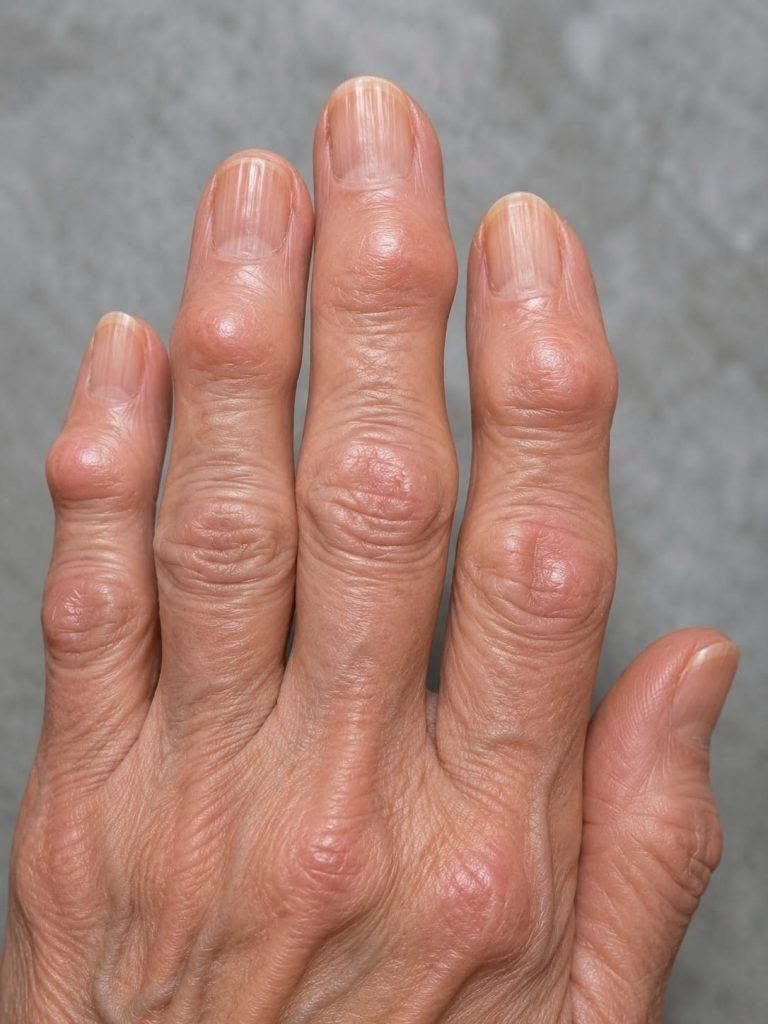
Have you noticed small, hard bumps developing around your finger joints? Perhaps your fingers have become increasingly stiff, swollen, or uncomfortable, making everyday activities such as opening jars, writing, or holding objects more difficult.
These changes can develop gradually, particularly as we grow older. One common explanation is hand osteoarthritis, a condition that affects the joints and can cause visible changes in the fingers.
Although these bumps are often associated with aging, they should not automatically be dismissed. Understanding their potential causes can help you take better care of your hands and maintain mobility.
What Are the Small Bumps on Finger Joints?
Hard, bony bumps that develop around finger joints are commonly associated with osteoarthritis.
There are two main types:
-
Heberden’s nodes: Bony enlargements that develop at the joints closest to the fingernails.
-
Bouchard’s nodes: Bony enlargements that develop at the middle joints of the fingers.
These bumps can form as the cartilage and underlying bone undergo changes associated with osteoarthritis.
Some people experience pain and stiffness, while others develop visible bumps without significant discomfort.
The image illustrates changes that may resemble these nodes, although a photograph alone cannot establish a medical diagnosis.
Common Causes of Enlarged Finger Joints
1. Hand Osteoarthritis
Osteoarthritis is one of the most common causes of enlarged finger joints. It develops when the cartilage and other tissues within a joint gradually change and deteriorate.
As the condition progresses, extra bone may develop around the affected joints, creating noticeable lumps.
These structural changes may affect finger flexibility and make certain movements uncomfortable.
Cleveland Clinic
2. Natural Aging
As people age, their joints undergo various biological changes. Cartilage may become less resilient, and joint stiffness may become more noticeable.
However, developing painful or swollen finger joints is not an inevitable part of aging.
3. Genetic Factors
A family history of hand osteoarthritis may increase the likelihood of developing similar joint changes.
If your parents or grandparents experienced enlarged finger joints, inherited characteristics may contribute to your individual risk.
4. Previous Hand Injuries
Past fractures, sprains, or other injuries affecting the fingers may increase the risk of osteoarthritis in the affected joints.
5. Inflammatory Arthritis
Conditions such as rheumatoid arthritis and psoriatic arthritis can also cause finger swelling, stiffness, and discomfort.
Unlike osteoarthritis, these conditions involve inflammation associated with immune system activity.
6. Gout
Gout occurs when urate crystals accumulate within joints. In some cases, long-standing gout can cause visible deposits called tophi around the fingers.
A healthcare professional can help distinguish between these different conditions.
Common Symptoms You Should Recognize
People experiencing hand osteoarthritis may notice:
-
Hard bumps around finger joints.
-
Morning stiffness.
-
Pain when gripping objects.
-
Reduced finger flexibility.
-
Swelling around affected joints.
-
Difficulty opening containers.
-
Reduced grip strength.
-
Changes in finger shape.
Symptoms vary considerably between individuals. Some people experience occasional discomfort, while others have persistent pain that interferes with daily activities.
Continued on the next page →
7 Ways to Help Relieve Finger Joint Pain and Stiffness
1. Use Gentle Heat Therapy
Warmth may help relax surrounding muscles and temporarily relieve joint stiffness.
Try soaking your hands in comfortably warm water for 10 to 15 minutes.
Avoid excessively hot water, particularly if you have reduced sensation in your hands.
Do not use heat on joints that are already hot and acutely inflamed.
2. Practice Gentle Finger Exercises
Regular, comfortable movement can help maintain finger mobility and flexibility.
Try slowly opening and closing your hands, gently spreading your fingers, and touching each fingertip to your thumb.
Avoid forcing your fingers into uncomfortable positions or continuing exercises that increase your pain.
Appropriate hand exercises are commonly recommended as part of osteoarthritis management.
NHS inform
3. Apply a Cold Compress
If your fingers become swollen after activity, a cold compress may provide temporary relief.
Wrap a cold pack in a clean towel and apply it for approximately 10 minutes.
Never place ice directly against your skin.
4. Follow a Balanced Diet
Although no specific food can remove bony finger nodules, a balanced diet supports overall health.
Consider including nutritious foods such as salmon, walnuts, olive oil, berries, leafy green vegetables, and legumes.
These foods can form part of a healthy Mediterranean-style eating pattern.
5. Protect Your Finger Joints
Small changes to your daily routine may reduce unnecessary joint strain.
Use ergonomic kitchen utensils, electric jar openers, comfortable pens, and tools with wider handles.
Avoid carrying heavy shopping bags using only your fingers.
6. Allow Your Hands to Rest
Repetitive or demanding activities can sometimes aggravate joint discomfort.
Take regular breaks when typing, gardening, cooking, knitting, or performing other tasks that require repeated hand movements.
Balance periods of rest with gentle activity.
7. Discuss Treatment Options With Your Doctor
If home care does not provide sufficient relief, a healthcare professional may recommend topical anti-inflammatory medication, hand therapy, splints, or other appropriate treatments.
In severe cases, surgery may be considered.
Merck Manual Professional Edition
A Simple Warm Hand Soak for Temporary Comfort
This inexpensive routine may help temporarily ease stiffness and make your hands feel more comfortable.
What You Will Need
-
A bowl of comfortably warm water
-
A clean, soft towel
-
A fragrance-free moisturizing cream
Instructions
-
Fill a bowl with comfortably warm water.
-
Place your hands in the water for 10 minutes.
-
Gently move your fingers without forcing them.
-
Remove your hands and dry them carefully.
-
Apply moisturizing cream to keep your skin hydrated.
Remember that this routine may temporarily relieve stiffness, but it cannot reverse arthritis or dissolve bony nodules.
Can Finger Joint Bumps Disappear Naturally?
Heberden’s and Bouchard’s nodes are structural changes involving the bone.
Although associated swelling and discomfort may improve, established bony enlargements generally do not disappear through massage, exercise, supplements, or homemade remedies.
Treatment primarily focuses on reducing discomfort, maintaining mobility, and improving hand function.
Osteoarthritis vs. Rheumatoid Arthritis
| Characteristic | Osteoarthritis | Rheumatoid arthritis |
|---|---|---|
| Main cause | Degenerative joint changes | Autoimmune inflammation |
| Morning stiffness | Often relatively brief | Frequently prolonged |
| Common finger locations | Middle and fingertip joints | Middle and base joints |
| Bony bumps | Common | Less characteristic |
| General fatigue | Less characteristic | May occur |
These differences are general patterns rather than diagnostic rules. Medical examination and sometimes additional testing are necessary to determine the underlying condition.
When Should You See a Doctor?
Arrange a medical appointment if you experience persistent finger pain, increasing joint enlargement, prolonged morning stiffness, reduced grip strength, or difficulty completing everyday tasks.
Seek urgent medical attention if a joint suddenly becomes hot, swollen, red, or severely painful, especially if you also have a fever or feel unwell. These symptoms may indicate an infection requiring prompt treatment.
NHS
Frequently Asked Questions
Are finger joint bumps always caused by arthritis?
No. Cysts, gout, previous injuries, and other medical conditions can also cause lumps around the fingers.
Can turmeric remove finger joint nodules?
There is no reliable evidence that turmeric can dissolve established bony nodules.
Is warm water good for stiff fingers?
Gentle warmth may provide temporary relief from stiffness, provided the joints are not acutely inflamed.
Can hand exercises prevent arthritis?
Exercises can support mobility and strength, but they cannot guarantee that arthritis will be prevented.
Do painless finger bumps require treatment?
Not necessarily. However, new or unexplained lumps should be evaluated to determine their cause.
Final Thoughts
Small bumps on the finger joints are often associated with hand osteoarthritis, particularly Heberden’s and Bouchard’s nodes.
Although these changes can be frustrating, appropriate treatment, gentle exercises, joint protection, and healthy lifestyle habits can help maintain hand function and manage discomfort.
The most important step is understanding the underlying cause rather than relying on products or homemade remedies promising to eliminate arthritis overnight.
Taking care of your hands today can help you remain comfortable, active, and independent for years to come.
