
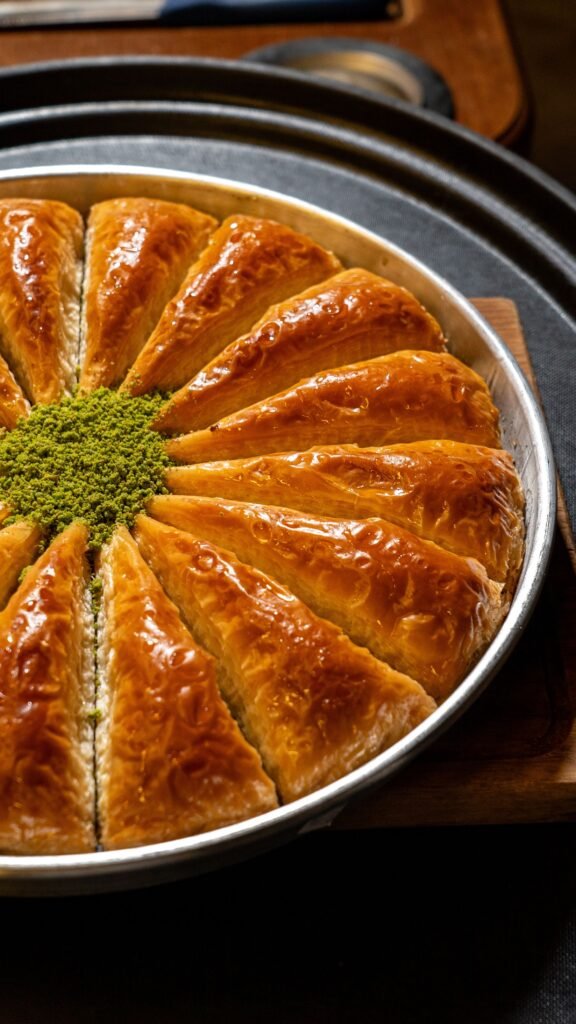
Pistachio baklava is one of those desserts that immediately feels special. With its crisp golden layers, rich nutty center, glossy finish, and unmistakable pistachio flavor, it brings together texture and sweetness in a way that few desserts can match.
Often served in small diamond- or triangle-shaped pieces, baklava is ideal for celebrations, holiday tables, dinner parties, and afternoon coffee. Its elegant appearance makes it feel luxurious, while its familiar combination of pastry, nuts, and syrup keeps it comforting and approachable.
For anyone who enjoys layered pastries, pistachio desserts, or Mediterranean and Middle Eastern sweets, baklava is a dessert worth knowing.
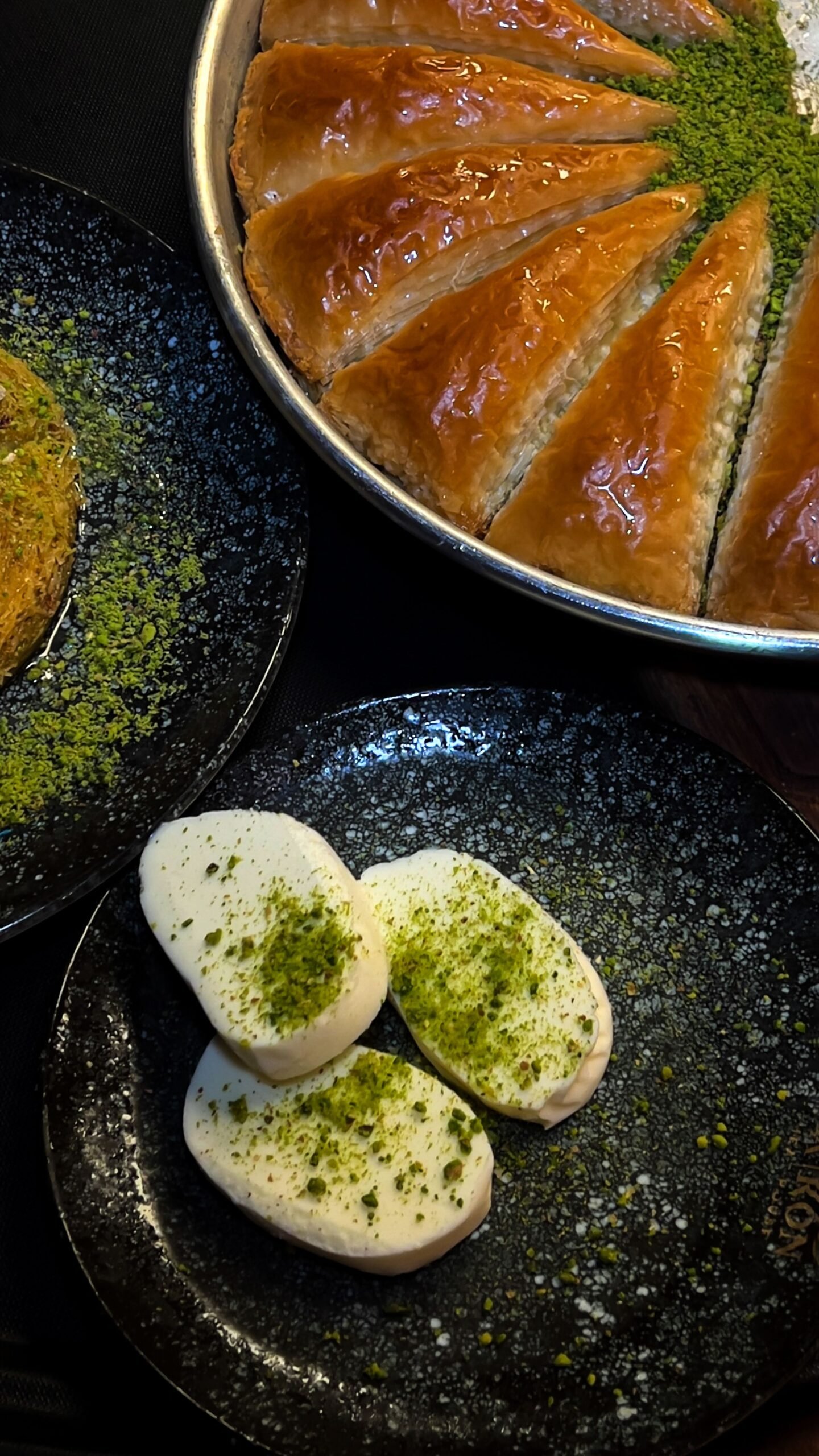
Pistachio Baklava
Ingredients
Equipment
Method
- Prepare the Nut Filling
- Finely chop the pistachios, then combine them with the sugar and cinnamon if using. Set aside.
- Prepare the Baking Dish
- Preheat the oven to 350°F (175°C). Brush the bottom and sides of a 9x13-inch baking dish with melted butter.
- Layer the Phyllo
- Place a sheet of phyllo dough in the baking dish and brush lightly with melted butter. Continue layering and buttering the sheets, keeping the unused phyllo covered with a slightly damp towel so it does not dry out.
- Add the Pistachio Filling
- After several layers of phyllo, sprinkle a portion of the pistachio mixture evenly over the surface.
- Continue Layering
- Repeat the layers of buttered phyllo and pistachio filling until all the filling is used, finishing with several layers of buttered phyllo on top.
- Cut Before Baking
- Using a sharp knife, carefully cut the baklava into diamonds, triangles, or squares before placing it in the oven.
- Bake
- Bake for about 40 to 45 minutes, or until the top is crisp and deeply golden.
- Make the Syrup
- While the baklava bakes, combine the sugar, water, honey, and lemon juice in a saucepan. Simmer gently for several minutes, then remove from the heat and stir in the vanilla and orange blossom or rose water if using.
- Add the Syrup
- Slowly pour the warm syrup over the freshly baked baklava, making sure it reaches the cuts between the pieces.
- Rest
- Let the baklava rest at room temperature for at least 4 hours so the syrup can absorb and the layers can set.
- Garnish and Serve
- Sprinkle with finely chopped pistachios before serving.
Notes
Why Pistachio Baklava Is So Popular
Baklava has been enjoyed across many cultures for generations, and different regions have developed their own styles.
Some versions feature walnuts, almonds, or mixed nuts, while pistachio baklava stands out for its distinctive flavor and beautiful green color.
Pistachios have a naturally rich, slightly sweet taste that pairs especially well with delicate pastry. They add both flavor and contrast, helping balance the sweetness of the dessert.
The result is a pastry that feels rich without relying on chocolate, cream, or heavy frosting.
The Appeal of Those Golden Layers
One of the most recognizable features of baklava is its layered appearance.
The pastry develops a crisp, flaky structure that gives each bite a satisfying texture. The contrast between the crunchy exterior and the softer nut-filled interior is a major part of what makes baklava memorable.
A well-presented tray also has strong visual appeal. Once cut into neat portions and finished with pistachios, the dessert can become the centerpiece of a dessert table without needing elaborate decoration.
Why Pistachios Work So Well in Desserts
Pistachios are especially popular in pastries because they contribute more than just crunch.
Their flavor is distinctive but not overpowering, making them compatible with delicate pastry and sweet syrups. Their natural green color also creates an attractive contrast against golden-brown baked layers.
That makes pistachio desserts particularly appealing for entertaining, holidays, and special occasions.
Baklava benefits from all of these qualities, which is why pistachio remains one of the most recognizable and popular variations.
A Dessert Made for Special Occasions
Pistachio baklava naturally fits festive occasions.
It can be served for family celebrations, holidays, weddings, dinner parties, or simply alongside coffee when guests visit.
Because the pieces are usually small and rich, baklava works especially well on dessert platters where people can take one or two pieces rather than being served a large individual portion.
It also pairs beautifully with other small desserts, fresh fruit, coffee, or tea.
A Beautiful Addition to a Dessert Table
Presentation is one of baklava’s biggest strengths.
The glossy golden surface, visible pastry layers, and green pistachios create a dessert that already looks polished before any additional decoration is added.
For a clean presentation, baklava can be arranged in neat rows or served directly from the baking tray.
Smaller pieces work particularly well for gatherings because they are easy to pick up and share.
What to Serve With Pistachio Baklava
Baklava is rich enough to stand on its own, but simple drinks can complement it nicely.
Strong coffee is a classic pairing because its bitterness balances the sweetness of the pastry.
Black tea, mint tea, or lightly sweetened tea can also work well.
For a larger dessert spread, fresh fruit provides a refreshing contrast to the richness of the pastry.
Why Baklava Is Such a Great Make-Ahead Dessert
One reason baklava works well for entertaining is that it does not need to be served immediately after baking.
Its flavor and texture can develop as it rests, making it convenient for occasions when you do not want to prepare dessert at the last minute.
That makes it useful for holiday planning, dinner parties, and family gatherings where several dishes need attention at the same time.
The Importance of Texture
Great baklava depends heavily on contrast.
The outer pastry should provide crispness, while the nut filling adds richness and texture. The sweet syrup brings moisture and flavor without completely softening the pastry.
When those elements are balanced, each bite delivers several textures at once.
That contrast is what separates memorable baklava from pastry that feels overly soft or overly sweet.
Is Baklava Very Sweet?
Baklava is definitely a sweet dessert, but the nuts help balance the sweetness.
Pistachios bring a savory, earthy quality that prevents the dessert from tasting one-dimensional.
Serving smaller portions also makes baklava easier to enjoy, especially after a larger meal.
A small piece with coffee or tea is often enough to make the dessert feel satisfying.
Cultural Popularity of Baklava
Baklava is associated with several culinary traditions across the Eastern Mediterranean, Middle East, Balkans, and surrounding regions.
Recipes and techniques vary depending on the country and family tradition.
Some versions emphasize pistachios, while others use walnuts or other nuts. Syrups and flavorings can also vary.
Rather than belonging to only one style of cooking, baklava has become part of a broad shared pastry tradition with many regional interpretations.
Food Safety and Storage
Baklava is generally more shelf-stable than desserts made with fresh cream or custard, but proper storage still matters.
If your version contains any perishable additions or is served alongside foods that require refrigeration, follow appropriate food-safety practices.
The U.S. Food and Drug Administration recommends keeping perishable foods properly refrigerated and avoiding leaving foods that require refrigeration at room temperature for extended periods.
You can read the official guidance here: FDA – Are You Storing Food Safely?
Keeping baklava properly covered also helps protect its texture and prevents it from absorbing unwanted odors.
Why Homemade Baklava Feels So Rewarding
Baklava has a reputation for looking difficult, but much of its appeal comes from patience and careful layering rather than complicated decoration.
Homemade versions also allow you to control the balance of sweetness, nuttiness, and texture.
For people who enjoy baking projects, it can be especially satisfying because the finished dessert looks far more elaborate than many everyday pastries.
Can Pistachio Baklava Be Served Year-Round?
Absolutely.
Although it is often associated with holidays and celebrations, there is no reason to reserve it only for special occasions.
It can be served after dinner, with afternoon coffee, at brunch, or as part of a weekend dessert table.
Its small portions and rich flavor make it easy to adapt to both casual and formal settings.
FAQ About Pistachio Baklava
Is pistachio baklava different from walnut baklava?
Yes. The overall style may be similar, but pistachios give the dessert a different flavor, color, and texture.
Is baklava served warm or cold?
Baklava is commonly enjoyed at room temperature, though preferences vary.
What drinks pair best with baklava?
Coffee, black tea, mint tea, and other unsweetened or lightly sweetened drinks pair especially well with its rich sweetness.
Can baklava be served at a party?
Yes. Its small portions and attractive appearance make it an excellent dessert for parties, holidays, and buffet-style gatherings.
Why is pistachio baklava so popular?
Pistachios add rich flavor, attractive color, and a satisfying nutty texture that pairs naturally with crisp pastry.
Is baklava considered a rich dessert?
Yes. It is typically rich and sweet, which is why relatively small portions are often enough.
A Classic Dessert Worth Sharing
Pistachio baklava combines crisp pastry, rich nutty flavor, and a beautiful golden presentation in one memorable dessert.
It feels elegant enough for celebrations but familiar enough to enjoy with a simple cup of coffee.
Whether served during the holidays, at a family gathering, or as an occasional homemade treat, pistachio baklava is the kind of dessert that naturally brings people back for another piece.
