
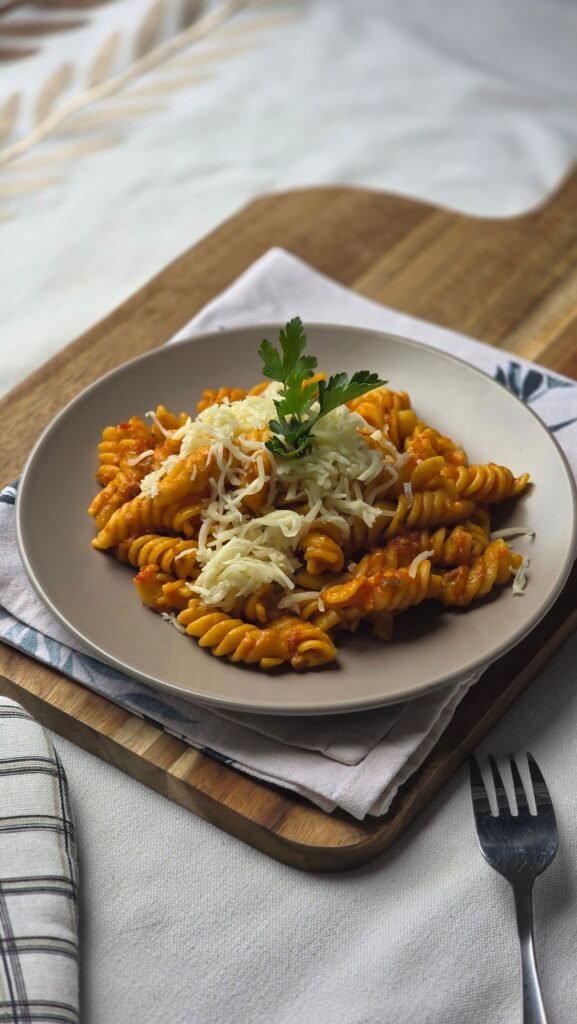
Some evenings call for a dinner that feels comforting without taking over the whole night. This cheesy tomato fusilli pasta is made for those evenings. Tender spirals of pasta are coated in a simple tomato sauce, then finished with shredded cheese and fresh parsley. It uses familiar ingredients, comes together in about 30 minutes, and makes a satisfying meal for four.
Fusilli is especially useful in this recipe because its twists hold onto the sauce, giving you flavor in every bite. Mozzarella adds a creamy, melty finish, while Parmesan brings a savory touch that makes this easy pasta dinner feel complete.
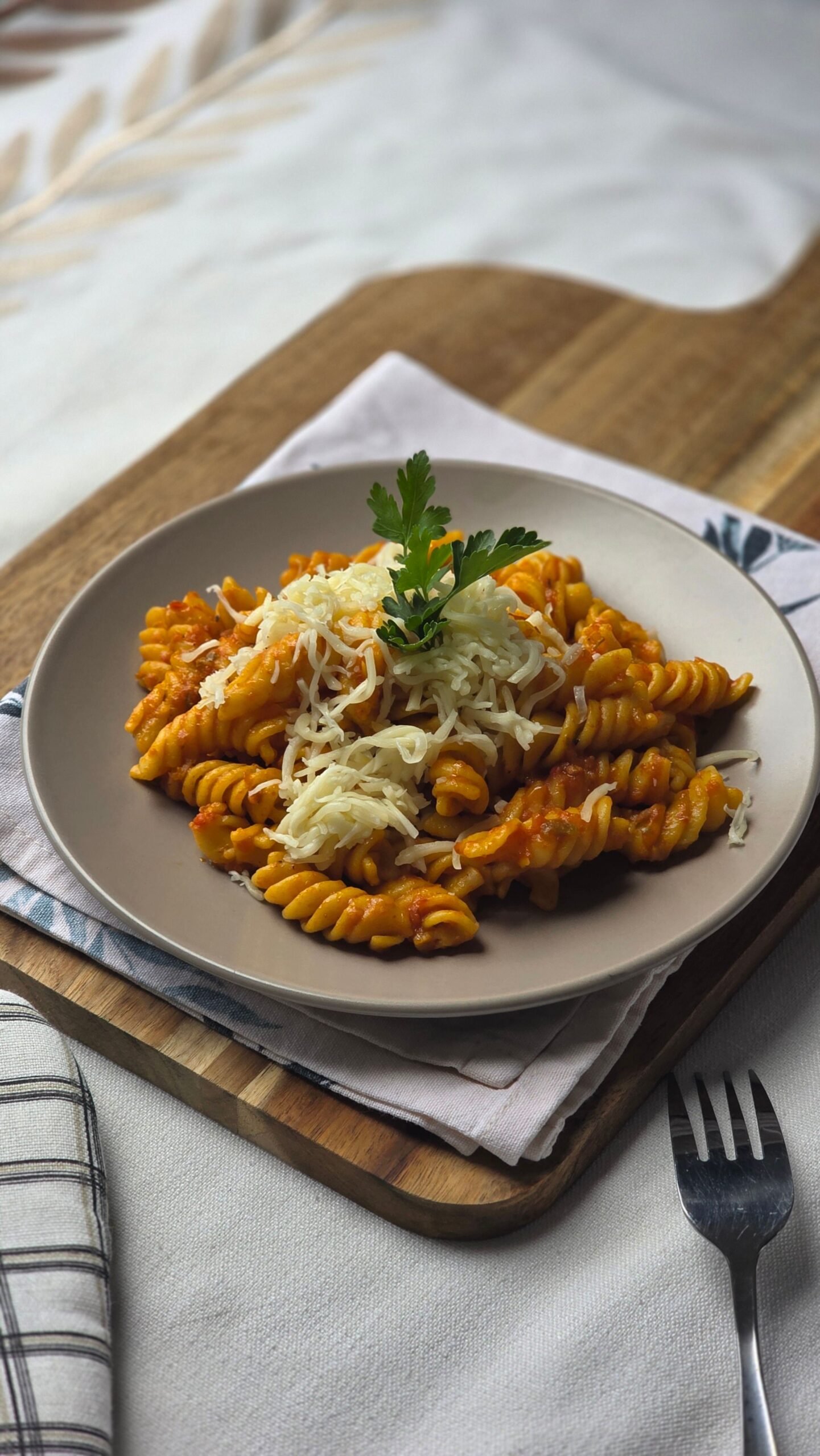
Easy Cheesy Tomato Fusilli Pasta
Ingredients
Equipment
Method
- Cook the fusilli in a large pot of salted boiling water according to the package directions until al dente. Reserve about 1 cup of pasta water, then drain without rinsing.
- While the pasta cooks, heat the olive oil in a large skillet over medium heat. Add the onion and cook for 4 to 5 minutes, until soft and translucent.
- Add the garlic and cook for 30 seconds. Stir in the tomato paste and cook for 1 minute, stirring constantly so it does not burn.
- Add the crushed tomatoes, oregano, basil, black pepper, and optional red pepper flakes. Simmer gently for 10 to 12 minutes. Season with salt and add the optional sugar only if the sauce tastes too sharp.
- Add the drained fusilli to the sauce and toss well. Add the reserved pasta water a little at a time if needed, then cook together over low heat for 1 to 2 minutes.
- Turn off the heat and stir in half of the mozzarella and Parmesan. Divide between four plates, then top with the remaining cheese and fresh parsley. Serve warm.
Why You’ll Love This Pasta
- It is practical for a busy evening. You can start the sauce while the pasta water comes to a boil.
- It uses familiar ingredients. There are no complicated techniques or unusual ingredients.
- It is flexible. Spinach, mushrooms, white beans, or cooked chicken can be added.
- The sauce coats the pasta well. Fusilli’s spiral shape catches tomato sauce in its curves.
- It makes useful leftovers. An extra portion can become tomorrow’s lunch.
This is the kind of dinner you can make when you want something warm and satisfying but do not want to spend a long time in the kitchen. Serve it with a simple salad if you like, or enjoy a generous bowl on its own.
What Each Ingredient Does
Fusilli pasta: The spiral shape holds onto the tomato sauce. Every turn and groove catches some of the sauce, making the finished pasta evenly flavored. If you cannot find fusilli, rotini is the closest substitute. Penne or rigatoni will also work.
Onion: A finely diced onion gives the sauce a gentle sweetness and a fuller flavor. Cutting it into small pieces allows it to soften quickly and blend into the tomatoes rather than standing out as large chunks.
Garlic: Garlic adds aroma to the sauce. It only needs a short time in the skillet before the tomatoes are added. Cooking it too long over high heat can make it bitter, so keep an eye on the pan.
Crushed tomatoes: Canned crushed tomatoes provide the base of the sauce without requiring a long cooking time. Brands vary in thickness and acidity. Taste the sauce after it simmers so you can adjust the seasoning to the tomatoes you actually used.
Tomato paste: A spoonful of tomato paste gives a quick sauce a more concentrated tomato flavor. Cooking it briefly in the olive oil before adding the crushed tomatoes helps remove its raw taste.
Olive oil: Olive oil helps soften the onion and carries the flavors of the garlic and herbs through the sauce. Two tablespoons are enough to make the sauce feel rounded without making it oily.
Oregano and basil: These dried herbs give the tomato sauce a familiar pasta-night flavor. Because dried herbs differ in strength, the amounts in the recipe are a starting point. Taste the sauce before adding more.
Mozzarella: Shredded mozzarella gives the pasta its soft, cheesy finish. Some is tossed through the hot pasta, while the rest is scattered on top. If you want visible strands of cheese like the plated dish, reserve plenty for the final topping.
Parmesan: Parmesan adds a saltier, more savory flavor. A little goes a long way. Taste the finished pasta before adding extra salt because the cheese may provide enough.
Parsley: Fresh parsley brightens the appearance of the dish and gives a contrast to the rich tomato and cheese flavors. Add it shortly before serving.
Reserved pasta water: The water left after cooking pasta contains some starch. A small splash helps loosen a thick sauce so it can coat the spirals. Save some before draining even if you are not sure you will need it.
Tips for the Best Tomato Fusilli
Cook the Pasta Just Until Al Dente
The pasta will spend another minute or two in the hot tomato sauce. If it is already very soft when you drain it, the fusilli may lose its texture while you toss it in the skillet. Start checking for doneness near the end of the package’s suggested cooking time.
Give the Sauce Time to Simmer
A quick tomato sauce still benefits from a few minutes on the stove. Allowing it to simmer helps the onion and garlic blend with the tomatoes and softens the flavor of the dried herbs. You do not need an all-day sauce for this dinner, but do not skip the short simmer.
Add Pasta Water a Little at a Time
It is easier to thin a thick sauce than to fix one that has become watery. Begin with a small splash of reserved pasta water, toss the pasta, and check the texture. Add more only when needed.
Season in Stages
Salt the pasta water, then taste the tomato sauce after it simmers. Taste once more after adding cheese. This approach helps you avoid adding too much salt before the Parmesan goes in.
Choose the Right Pan
Use a skillet large enough to hold both the sauce and the cooked fusilli. Having room to toss the pasta makes it much easier to coat the spirals evenly without spilling dinner onto the stove.
Finish with Fresh Herbs
Add parsley just before serving. Its fresh flavor and green color stand out best when it has not spent several minutes cooking in the sauce. Fresh basil is another good finishing option if you have it.
Easy Variations
Once you have made the basic version, you can adapt it to ingredients you already have. Keep the tomato sauce as the base and add one or two extras rather than crowding the skillet with too many different flavors.
Tomato Fusilli with Spinach
Stir a few handfuls of baby spinach into the sauce during its final 2 minutes of simmering. Let the leaves wilt, then toss in the cooked pasta. This is an easy way to add greens without making a separate side dish.
Tomato Fusilli with Mushrooms
Slice about 8 ounces of mushrooms and cook them with the onion. Give them enough time to release much of their moisture before adding the garlic and tomato paste. Mushrooms make the meal heartier while keeping it meatless.
Tomato Fusilli with Zucchini
Dice one small zucchini. Add it after the onion has softened and cook until it begins to turn tender. Continue with the garlic, tomato paste, and tomatoes. Keep the zucchini pieces small so they cook in the short time available.
Tomato Fusilli with White Beans
Drain and rinse one can of white beans. Stir them into the tomato sauce for the last few minutes of simmering. The beans turn the pasta into a more substantial dinner and work well with the garlic and herbs.
Tomato Fusilli with Cooked Chicken
If you have leftover cooked chicken, cut it into bite-size pieces and add it to the sauce before the pasta. Warm it thoroughly, then finish the recipe as written. This is a convenient way to use chicken that has already been cooked.
A Spicier Version
Increase the red pepper flakes a little at a time. You can also leave the sauce mild and offer red pepper flakes at the table, so each person can choose their own level of heat.
A Creamier Tomato Sauce
For a softer, creamier sauce, stir in about 2 tablespoons of cream after the tomatoes have simmered. Taste before adding more. The cheese also adds creaminess, so you may find that a small amount of cream is enough.
What to Serve with Tomato Fusilli
This pasta can be a complete dinner on its own, especially when you serve a generous portion. If you want something alongside it, choose a side that offers a fresh or crisp contrast to the warm, cheesy pasta.
A simple green salad is an easy choice. Lettuce, cucumber, and a light dressing bring freshness without competing with the tomato sauce. Steamed broccoli or green beans are also practical sides when you want to add vegetables.
Garlic bread is useful for catching any tomato sauce left on the plate. If you prefer a simpler accompaniment, serve slices of bread with a little olive oil. For a family meal, place the pasta in a large serving bowl and put extra cheese and parsley on the table so everyone can finish their own portion.
How to Store and Reheat Leftovers
Transfer leftover pasta to a shallow, covered container and refrigerate it promptly. As a practical guide, use refrigerated leftovers within 3 to 4 days. FoodSafety.gov’s cold food storage chart gives guidance for storing leftovers and recommends keeping the refrigerator at 40°F (4°C) or below.
To reheat a serving on the stove, put it in a skillet with a small splash of water. Warm it over medium-low heat, stirring occasionally, until heated throughout. Pasta tends to absorb some sauce while stored, and the added water helps loosen it again.
You can also reheat the pasta in a microwave-safe dish. Cover it loosely and heat it in short intervals, stirring between them so it warms evenly. Add fresh parsley or a little more cheese after reheating if you like.
Freezing is possible, but cooked pasta may become softer after thawing. If you are planning meals ahead specifically for the freezer, freezing the tomato sauce separately and cooking fresh pasta later will usually give a better texture.
Common Mistakes to Avoid
Forgetting to Save Pasta Water
It is easy to drain a pot of pasta automatically. Put a heat-safe cup beside the stove as a reminder to scoop out some water first. You might not use it all, but having it available makes it much easier to adjust the finished sauce.
Overcooking the Fusilli
Very soft pasta can break or become mushy when tossed with the sauce. Remember that it will spend a little more time in the hot skillet. Drain it when it is tender but still has a slight firmness.
Burning the Garlic
Garlic needs less time than onion. Add it only after the onion has softened and stir it for about 30 seconds before adding tomato paste. If the pan seems too hot, lower the heat before the garlic goes in.
Adding Too Much Pasta Water
A little pasta water can improve the texture of the sauce; too much can dilute it. Add a splash, toss, and check. Repeat only if the pasta still looks dry.
Adding Cheese Over High Heat
Cheese can stick to the pan or become clumpy over strong heat. Turn off the heat before mixing in the first portion of mozzarella and Parmesan. Save the rest to sprinkle over the plated pasta.
Skipping the Final Toss
Putting tomato sauce on top of plain pasta is quick, but tossing them together makes a more evenly coated dish. Give the fusilli a minute in the skillet so the sauce settles into its spiral shape.
Frequently Asked Questions
Can I Use a Different Pasta Shape?
Yes. Rotini is the closest substitute because it also has a spiral shape. Penne and rigatoni work as well. Follow the cooking directions on the package for whichever shape you choose.
Can I Use Fresh Tomatoes Instead of Canned?
Yes, but fresh tomatoes may require more preparation and more simmering time. Their water content and sweetness can vary considerably. Canned crushed tomatoes are the more convenient option for this 30-minute recipe.
Is Tomato Paste Necessary?
Tomato paste is helpful because it adds concentrated flavor to a sauce that does not cook for very long. If you do not have it, you can leave it out and simmer the crushed tomatoes for a few extra minutes.
Can I Make This Pasta Without Mozzarella?
Yes. You can use another cheese you enjoy, add a little extra Parmesan, or leave the cheese out altogether. Without mozzarella, the texture and flavor will change, but the tomato pasta itself will still work.
Why Is My Sauce Too Thick?
The tomatoes may have reduced more than expected, or the pasta may have absorbed some liquid. Add reserved pasta water a small splash at a time and toss until the sauce coats the pasta comfortably.
Why Does My Tomato Sauce Taste Too Sharp?
Some canned tomatoes taste more acidic than others. Let the sauce finish simmering, then taste it again. If necessary, stir in the optional small amount of sugar to balance the sharpness.
Can I Prepare the Sauce Ahead?
Yes. Make the sauce ahead and refrigerate it in a covered container. Reheat it while you cook fresh fusilli, then combine them in the skillet. Add a little pasta water if the sauce needs loosening.
Can I Add Meat to This Recipe?
Yes. You can add thoroughly cooked ground meat or cooked chicken to the tomato sauce. Heat it through before tossing in the pasta. The basic recipe is meatless to keep the tomato, pasta, and cheese as the main flavors.
Can I Make It Spicy?
Yes. Increase the optional red pepper flakes gradually. You can also keep the main skillet mild and let people add extra heat to their own bowls.
Is This a Good Make-Ahead Dinner?
The tomato sauce is excellent for making ahead. For the best pasta texture, cook the fusilli shortly before serving. If you need to prepare the entire meal in advance, store it properly and use a splash of water when reheating.
A Simple Dinner to Make Again
A useful weeknight recipe is one you can return to without checking a long shopping list. This cheesy tomato fusilli needs one pot, one skillet, and ingredients that work in many other meals. Boil the pasta, simmer the sauce, toss everything together, and finish with cheese and parsley.
Serve it as a quick dinner tonight, then keep the basic method in mind for another evening. Add a vegetable when you have one, adjust the cheese to your taste, and use a splash of pasta water whenever the sauce needs help coating the spirals. It is a simple way to put a warm meal on the table.