
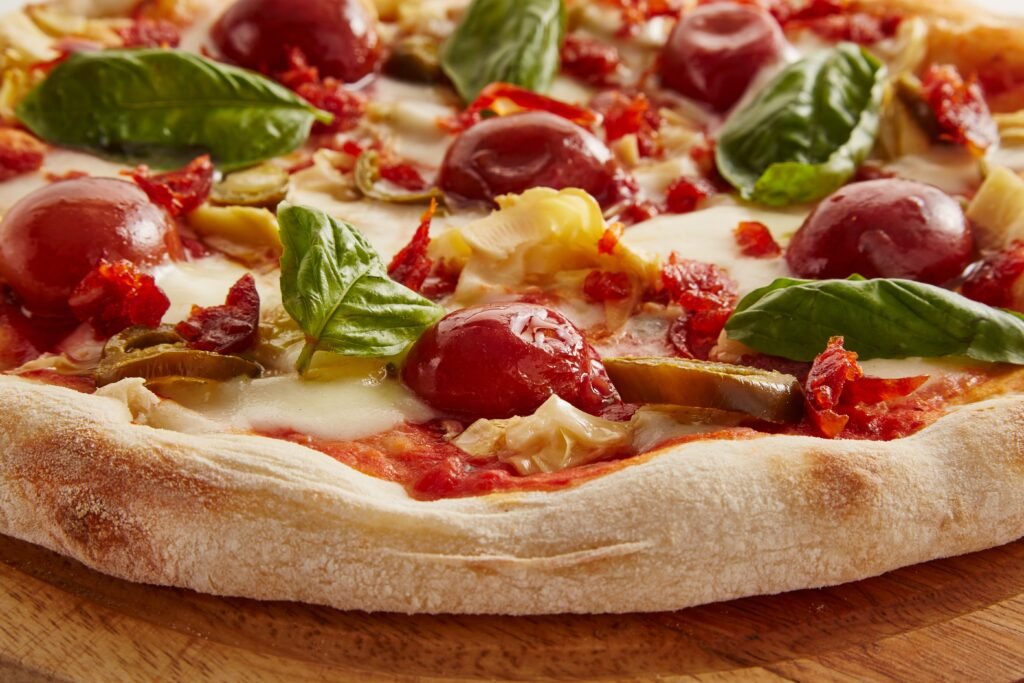
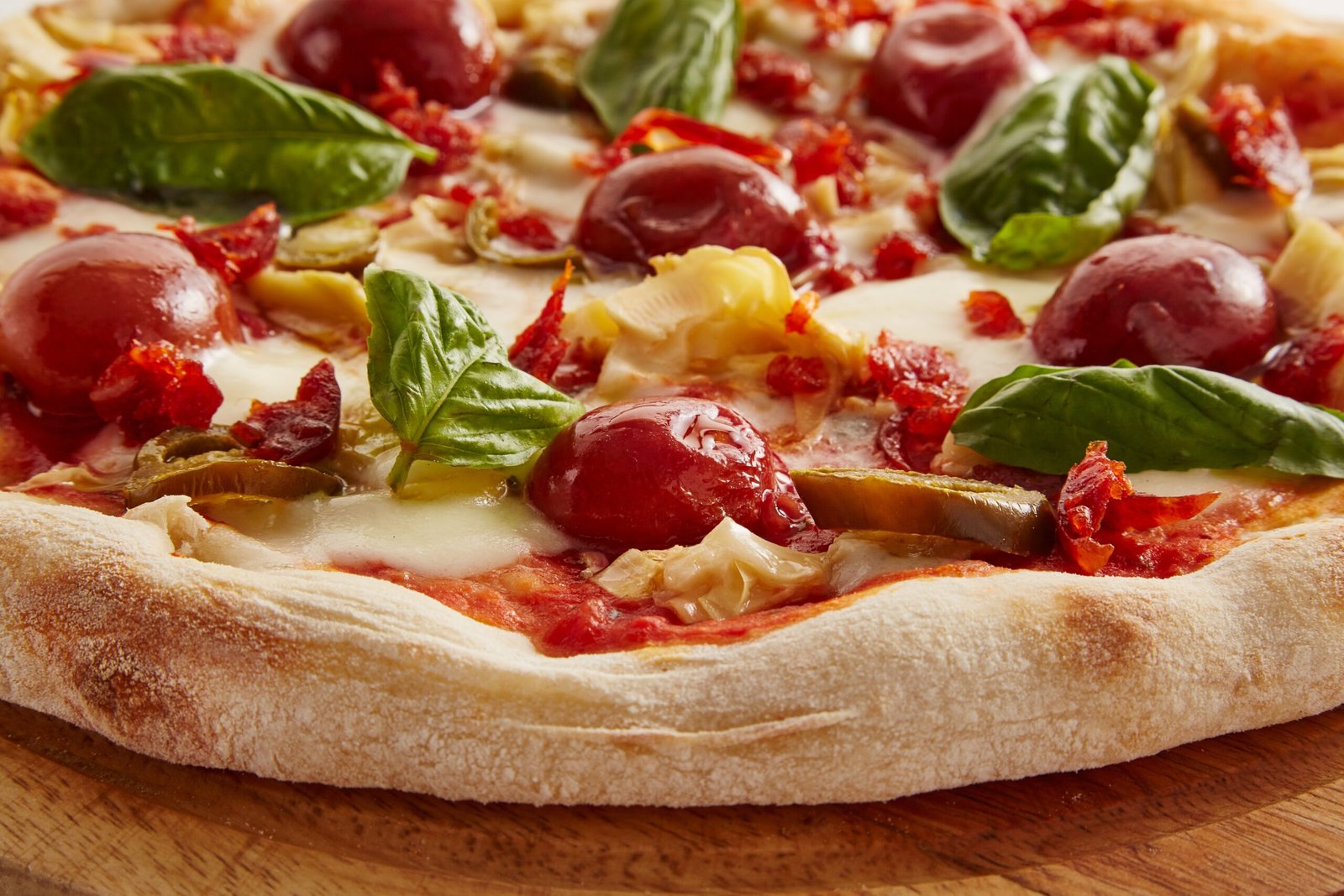
Homemade Salami, Olive and Artichoke Pizza
Ingredients
Equipment
Method
- Mix the flour, instant yeast, sugar, and salt in a large bowl. Add the lukewarm water and olive oil, then stir until a rough dough forms.
- Transfer the dough to a lightly floured surface and knead for 6 to 8 minutes, until smooth and elastic.
- Place the dough in a lightly oiled bowl, cover it, and let it rise for about 1 hour, or until noticeably puffed.
- Mix the crushed tomatoes, olive oil, oregano, garlic, and a pinch of salt. Drain and prepare the olives, artichokes, salami, mozzarella, and optional cherry tomatoes.
- Preheat the oven to 475°F (245°C) for 20 to 30 minutes. Preheat the pizza stone or steel if using one.
- Stretch the dough into a 12- to 13-inch circle and transfer it to a prepared baking sheet or pizza stone.
- Spread the tomato sauce over the dough, leaving a border. Add the mozzarella, salami, green olives, artichoke hearts, and optional cherry tomatoes.
- Bake for 12 to 16 minutes, until the crust is puffed and golden and the cheese is melted.
- Let the pizza rest for 2 minutes. Top with fresh basil and optional red pepper flakes, then slice and serve.
Homemade pizza night feels especially inviting when the crust comes out golden, the cheese is melted, and every slice offers a different combination of toppings. This homemade salami, olive and artichoke pizza brings those details together on one generously topped pie. A simple tomato sauce sits beneath mozzarella, while slices of salami, green olives, artichoke hearts, and fresh basil give the finished pizza color and plenty of flavor.
This pizza has a raised, lightly browned crust and a colorful mix of savory toppings. You do not need a pizza oven or a complicated sauce to make it at home. The two steps that matter most are allowing the oven to become properly hot and draining wet toppings so they do not soak the dough.
Make the dough from scratch if you have time, or use a prepared pizza dough for a quicker dinner. The recipe below includes both options, along with instructions for shaping, topping, baking, and storing the pizza. You can also choose beef or turkey salami if that better suits your household. Either way, the result is a pizza designed to be sliced, shared, and enjoyed while the crust is still warm.
Why You’ll Love This Homemade Pizza
- It has several flavors in every slice. Salami, olives, artichokes, tomato, mozzarella, and basil each add something different.
- The crust has a soft, raised edge. Leaving the outside border free of sauce gives it space to puff and brown.
- You can prepare parts ahead. The dough can rise while you get the toppings ready, and the sauce takes only a few minutes to mix.
- It works with store-bought dough. If you want pizza tonight, you can skip the dough-making stage and follow the same topping and baking method.
- It is easy to adapt. You can adjust the amount of olives, use halal beef or turkey salami, or leave out the meat for a vegetable version.
This is the kind of dinner that rewards a little preparation without asking you to spend the whole evening in the kitchen. While the dough rests, drain the artichokes, slice the olives, and prepare the cheese. When everything is ready before you begin shaping, the pizza can move into the hot oven quickly.
The total time includes making and rising the homemade dough. With ready-made pizza dough, plan for roughly 30 to 40 minutes, depending on how long your oven takes to heat. Actual baking time will vary with the thickness of the crust, the pan you use, and your oven.
Using prepared dough? Replace the homemade dough ingredients with one ball of store-bought dough, about 12 to 16 ounces. Let chilled dough stand at room temperature according to its package directions so it is easier to stretch. Keep the sauce and topping quantities the same.
Understanding the Toppings
Salami
Thin slices of salami provide a savory contrast to the tomato sauce and cheese. Use a salami you already enjoy eating, and check the package to confirm whether it is ready to eat or requires cooking. Beef or turkey salami can be used in place of another type. Cut large slices into smaller pieces so the topping reaches several parts of the pizza instead of gathering in one place.
Salami can become quite salty as it heats, especially alongside olives. For that reason, the sauce needs only a small pinch of salt. Taste the olives and salami before deciding whether you want to season the finished pizza any further.
Green olives
Green olives add a briny bite that keeps the melted cheese from tasting too rich. Drain them well, then slice them into rings or halves. Whole olives can roll off a slice and make the topping harder to distribute evenly. If your olives are particularly salty, use a little less or give them a quick rinse and dry them before adding them to the pizza.
Artichoke hearts
Artichoke hearts add a tender texture and a gentle vegetable flavor. Jarred or canned artichokes both work, but they need to be drained thoroughly. Artichokes packed in oil may need to be blotted with a paper towel, while water-packed artichokes should be allowed to drain in a strainer. Too much liquid on the dough makes a crisp base harder to achieve.
Mozzarella and tomato sauce
Low-moisture mozzarella is an easy choice for this recipe because it melts well without releasing as much water as fresh mozzarella. The sauce is deliberately simple. Crushed tomatoes, olive oil, oregano, and garlic create a bright base without covering up the other toppings. Use a thin, even layer; a pizza with too much sauce can become soft in the center.
Fresh basil
Basil is best added after baking. The heat from the pizza warms the leaves, but they keep more of their color and fresh aroma. You can tear larger leaves over the pizza or leave smaller ones whole. If fresh basil is unavailable, the pizza still works with the oregano already mixed into the sauce.
Equipment You’ll Need
For the dough, use a mixing bowl, measuring cups or a kitchen scale, and a clean work surface. For baking, a pizza stone or steel can help brown the base, but neither is essential. An ordinary baking sheet makes a good homemade pizza. Parchment paper can make transferring the shaped dough easier, as long as the paper is rated for the oven temperature you plan to use. Check its packaging before putting it into a very hot oven.

Also have a spoon for spreading the sauce, a small bowl for the toppings, and a knife or pizza cutter for serving. Tongs or a heatproof spatula can help move the finished pizza. Oven mitts are important because the pan and oven will be very hot.
How to Make the Pizza Dough
1. Mix the ingredients
Put the flour, instant yeast, sugar, and salt in a large bowl. Stir briefly to distribute them. Add the lukewarm water and olive oil, then mix with a spoon until there is no dry flour left in the bowl. The dough may look rough at this point. That is normal; it will become smoother after kneading.
The water should feel pleasantly warm, not hot. If it is too hot, it can interfere with the yeast. If the dough seems very dry, add water one teaspoon at a time. If it is very sticky, dust your hands and work surface lightly with flour rather than adding a large amount at once.
2. Knead until smoother
Turn the dough onto a lightly floured surface and knead for about 6 to 8 minutes. Push it away with the heel of your hand, fold it back, and repeat. As you work, it should become more elastic and easier to handle. The dough does not have to look perfectly smooth, but it should hold together as one soft ball.
If you use a stand mixer with a dough hook, mix on a low setting until the dough comes together and becomes elastic. Watch its texture rather than relying only on the clock: flour absorbs water differently, and a small adjustment may be needed.
3. Let it rise
Lightly oil the mixing bowl, place the dough inside, and turn it once so the surface is lightly coated. Cover the bowl and leave it in a comfortable room-temperature spot until the dough looks noticeably puffed, usually about 1 hour. A cool room may require longer. There is no need to force a fast rise; use the appearance of the dough as your guide.
While it rises, prepare the sauce and toppings. This is the ideal time to drain the olives and artichokes and to grate the mozzarella if it is not already shredded.
Prepare the Sauce and Toppings
Mix the crushed tomatoes, teaspoon of olive oil, oregano, garlic, and pinch of salt in a small bowl. If the tomatoes are especially watery, let them sit briefly in a fine strainer before mixing. You want a sauce that can be spread thinly without running toward the middle of the pizza.
Drain and slice the green olives. Cut the artichoke hearts into pieces that will fit comfortably on a slice. Blot wet artichokes with a paper towel. If using cherry tomatoes, cut them in half and place the cut sides on a paper towel for a few minutes. This removes some moisture before baking.
Prepare the salami and cheese last, then keep everything within reach. Once the dough is stretched, it is best to top and bake it promptly. Leaving a heavily topped unbaked pizza on the counter can make it stick to the surface beneath it.
How to Assemble and Bake the Pizza
1. Heat the oven
Place a rack in the lower-middle part of the oven and preheat to 475°F (245°C). Give the oven at least 20 to 30 minutes to heat thoroughly. If using a pizza stone or steel, follow its instructions for preheating. If using a baking sheet, you can shape the pizza directly on a lightly oiled sheet or on oven-safe parchment placed on the sheet.
A hot oven helps the dough rise quickly and gives the crust color before the toppings dry out. Because ovens differ, look at the crust and cheese during the final minutes rather than assuming every pizza will finish at exactly the same time.
2. Shape the dough
Gently press the risen dough to release some air, then transfer it to a lightly floured surface. Start at the center and press outward with your fingertips, leaving a thicker border around the edge. Lift and stretch the dough gradually into a roughly 12- to 13-inch circle. An uneven handmade shape is perfectly fine.
If the dough pulls back every time you stretch it, let it rest for 5 to 10 minutes and try again. A short rest helps it relax. Avoid pressing all the air out of the outer border; that edge is what becomes the raised crust shown in the finished pizza.
3. Add sauce and cheese
Move the dough onto the prepared baking surface. Spoon the tomato sauce over the center and spread it into a thin layer, stopping about 3/4 inch from the outer edge. Scatter the mozzarella evenly over the sauce. Try to leave a little space between some of the toppings so heat can reach the surface of the pizza.
The goal is coverage rather than a deep pile of cheese. If too much cheese is concentrated in the middle, the center may remain soft while the edges brown. You can save any extra mozzarella for another meal.
4. Arrange the other toppings
Distribute the salami across the cheese. Add the green olives, artichoke pieces, and optional cherry tomatoes. Spread them around so each slice will include several flavors. Keep the fresh basil aside until after baking. Brush or lightly rub the exposed crust with a little olive oil if you want an evenly golden edge.
Before the pizza goes into the oven, check that the artichokes and tomatoes have not left visible pools of liquid. Blot any wet area gently with a clean paper towel. This small step can make a noticeable difference to the center of the crust.
5. Bake until golden
Bake for about 12 to 16 minutes, or until the edge is puffed and golden, the cheese is melted, and the bottom of the pizza looks cooked and lightly browned. If your oven heats unevenly, carefully rotate the pizza once during the second half of baking. Keep an eye on the exposed salami, which can darken faster than the cheese.
If the top looks ready but the bottom needs more time, move the pizza to a lower rack for a short final bake, if your oven setup allows it safely. If the bottom is cooked and the cheese needs a little more color, move the pizza up a rack briefly. These are small finishing adjustments; avoid leaving it unattended.
6. Finish with basil and serve
Transfer the pizza to a board and let it rest for about 2 minutes. Scatter fresh basil leaves over the top and add an optional pinch of red pepper flakes. Slice into four large or eight smaller pieces. Letting it rest briefly helps the hot cheese settle so the toppings stay in place when you cut it.
How to Make a Better Crust in a Home Oven
You do not need restaurant equipment to make enjoyable homemade pizza, but it helps to understand what the dough needs. First, the oven must be thoroughly heated. The dial reaching its target temperature does not always mean the pan or baking surface has had enough time to warm. Give the oven extra time before baking, especially if you are using a stone or steel.
Second, avoid overloading the dough. This pizza has several toppings, so each one should be used in a moderate amount. A thin layer of sauce, evenly scattered cheese, and well-drained vegetables allow the dough to bake properly. More toppings do not always produce a better slice if the middle stays soft.
Third, leave the rim uncovered. Pressing a narrow edge into the dough as you shape it and keeping sauce away from that edge creates room for a raised crust. A light coating of olive oil can help the outside brown, but you do not need to soak the dough in oil.
Finally, check the underside before removing the pizza. Gently lift an edge with a heatproof spatula. The bottom should look set and show some browning. If the top is attractive but the base is still pale and soft, give it a little more time on a lower rack.
Using Store-Bought Pizza Dough
Prepared pizza dough is a practical option for a busy evening. Bring refrigerated dough closer to room temperature as directed on its packaging. Cold dough often springs back when stretched, which can make shaping frustrating. If it resists, cover it and let it rest a little longer before continuing.
Use the same sauce and toppings listed above. Check the dough package for recommended oven temperature and timing, since thickness and ingredients vary between products. If its directions differ from this recipe, start with the package guidance and use the visual signs of doneness: browned crust, melted cheese, and a cooked underside.
You can also use a ready-made pizza base, though it will not have quite the same raised edge as freshly stretched dough. In that case, avoid baking it as long as raw dough. The purpose is to heat the base and toppings thoroughly without drying them out.
Easy Variations
Vegetarian olive and artichoke pizza
Leave off the salami and use a little more artichoke and olives. Sliced mushrooms or thin strips of bell pepper can make the topping feel more substantial. If you add mushrooms, cook or thoroughly dry them first so they do not release too much liquid onto the pizza.
Halal beef or turkey salami pizza
Choose a clearly labeled halal beef or turkey salami if you need that option. Read the package directions and confirm whether the product is ready to eat. The topping amount and assembly steps are the same. Because different brands have different salt and moisture levels, keep the tomato sauce lightly seasoned.
Extra basil pizza
For a fresher finish, add more basil as soon as the pizza comes out of the oven. Let the leaves warm against the melted cheese, then serve. You can also add a very small drizzle of olive oil, but keep it light so the pizza does not become greasy.
Spicy olive and salami pizza
Sprinkle a pinch of red pepper flakes over the cheese before baking, then add another small pinch at the table if desired. The heat pairs well with olives and tomato. Add it carefully if the salami you chose already tastes spicy.
Smaller individual pizzas
Divide the dough into two smaller balls after the rise and shape two personal pizzas. Distribute the sauce and toppings between them. Smaller pizzas may bake faster, so begin checking them earlier than the time listed for one large pizza.
What to Serve with Pizza for Dinner
A crisp green salad makes a simple side for this generously topped pizza. Lettuce, cucumber, and a light vinaigrette work well because they provide a fresh contrast to the cheese, olives, and salami. You can also serve sliced vegetables with a mild dip while the pizza bakes.
If you are cooking for several people, set the salad on the table before the pizza comes out of the oven. That way, you can cut and serve the pizza while the crust is at its best. For a family meal, make the pizza as written and let everyone decide whether to add extra basil or pepper flakes to their own slice.
One large pizza serves four with a side salad, or fewer people if it is the entire meal and everyone wants a generous portion. The exact number of servings depends on appetite and the size of your prepared dough.
Make-Ahead Tips
You can measure the dry dough ingredients in advance and set them aside in a covered bowl. The sauce can be mixed earlier in the day and refrigerated until you are ready to assemble the pizza. Keep drained olives and artichokes in separate covered containers so you can scatter them evenly later.
If making the dough ahead, let it rise as directed, then refrigerate it in a covered, lightly oiled container with room to expand. When you are ready to bake, allow it time to become easier to stretch. Dough that is still very cold can resist shaping; give it a short rest rather than forcing it into a circle.
Do not assemble a heavily topped raw pizza far in advance. Tomato sauce and damp vegetables can gradually soften the dough. For the best texture, prepare the components ahead, then shape, top, and bake close to dinnertime.
How to Store and Reheat Leftover Pizza
Refrigerate leftover slices promptly in a covered container. According to FoodSafety.gov’s cold food storage chart, pizza can be kept in a refrigerator at 40°F (4°C) or below for 3 to 4 days. Its chart also lists 1 to 2 months in the freezer as a quality guideline. Wrap slices well if freezing so they do not dry out.
To reheat a slice, place it in a skillet over low heat and warm it until the bottom becomes crisp and the toppings are hot. You can cover the skillet briefly to help warm the cheese. A baking sheet in a moderate oven also works, particularly when reheating several slices at once. A microwave is convenient but usually gives a softer crust.
Fresh basil may darken after storage, so you can remove any wilted leaves before reheating and add new basil afterward. If there are cherry tomatoes on the pizza, expect them to soften more as the slice warms for a second time.
Common Pizza Problems and How to Fix Them
The center is soft
There may be too much sauce, cheese, or moisture from the toppings. Next time, spread a thinner sauce layer and dry the olives, artichokes, and tomatoes more carefully. Make sure the oven is fully preheated. For the current pizza, check whether the bottom can take a little more baking time on a lower rack.
The dough keeps shrinking
Let it rest for 5 to 10 minutes before stretching again. Dough that has just been kneaded or taken from the refrigerator can be resistant. Work outward gently with your fingertips instead of pulling one edge too hard.
The cheese browns too quickly
Your pizza may be too close to the top heating element. Move the rack lower for the next pizza, or begin checking it earlier. If the cheese has reached the color you like but the crust still needs time, loosely protect the top with foil if you can do so safely without touching the heating element.
The artichokes taste watery
Drain them longer and blot them with paper towels before baking. Oil-packed and water-packed varieties need slightly different handling, but both should feel relatively dry before being scattered over the mozzarella.
The crust is pale
Give the oven longer to preheat and check the position of the rack. A lightly oiled outer edge can brown more attractively. Also check that the dough has been baked long enough underneath, not only that the cheese has melted on top.
Frequently Asked Questions
Can I use fresh mozzarella?
Yes, but drain it thoroughly and pat it dry. Fresh mozzarella contains more moisture than the low-moisture cheese in this recipe. Tear it into small pieces and leave space between them so the base has a better chance to cook through.
Can I make this pizza without salami?
Absolutely. Keep the olives, artichokes, tomato sauce, cheese, and basil, then add another vegetable if you like. The baking method stays the same. Be especially careful to dry any additional vegetables before topping the pizza.
Should basil go on before or after baking?
Add it after baking for the fresh green appearance and aroma shown in the photograph. Basil placed in a very hot oven can darken quickly. If you want the herb flavor in the sauce as well, use a little dried basil or oregano there.
Can I make this pizza without a stone?
Yes. A standard baking sheet works. Lightly oil it or use parchment that is rated for your oven temperature. Check the underside of the pizza near the end of baking and give it additional time if it still looks pale.
What kind of olives should I use?
Use green olives that you enjoy eating. Pitted olives are easiest to slice and distribute. If you prefer a less salty pizza, use fewer olives or rinse and dry them before adding them to the toppings.
Can I use pizza sauce from a jar?
Yes. Use about 1/2 cup for one pizza, and avoid a very watery sauce. Taste it before adding extra salt, since packaged sauces are already seasoned. Spread it thinly so the middle of the pizza does not become soggy.
How do I know the pizza is finished?
Look for a puffed, golden outer crust, melted cheese, and a cooked base that shows some browning when you lift an edge carefully. The toppings should be hot. Oven times vary, so those signs are more useful than relying on the clock alone.
Can I freeze leftover slices?
Yes. Let them cool, wrap them well, and freeze them in a suitable container. Reheat until hot. The fresh basil may not keep its original texture, so add new leaves after reheating if you want that fresh finish.
Estimated Nutrition Information
Approximate values per serving, if the pizza is divided into four: 500 to 650 calories, 22 to 28 g protein, 55 to 65 g carbohydrates, and 20 to 30 g fat. These are broad estimates rather than verified nutrition data. The amount and type of salami, cheese, olives, and prepared dough can change the numbers substantially.
For more accurate nutrition information, use the labels from the exact ingredients you purchase and calculate the amount in the portion you eat. If you use store-bought dough, begin with its package information rather than the estimated values for this homemade version.
Make Pizza Night Your Own
Homemade salami, olive and artichoke pizza is a satisfying dinner because it combines a familiar tomato-and-cheese base with toppings that bring color, texture, and contrast. A well-heated oven, a lightly topped center, and thoroughly drained vegetables help the crust bake properly. Fresh basil added at the end makes the finished pizza look as welcoming as it tastes.
Use the homemade dough when you have time for the rise, or choose prepared dough when dinner needs to come together faster. Once you know the basic method, you can adjust the salami, olives, and vegetables to suit your table. Slice the pizza while it is warm, serve it with a simple salad if you like, and save any leftovers for an easy meal the next day.