
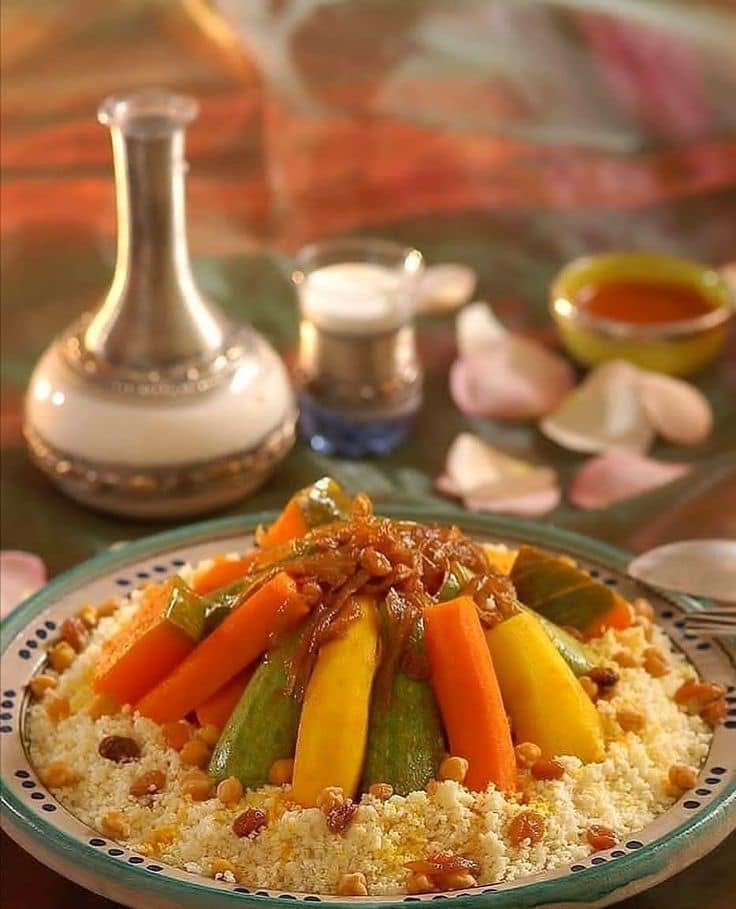
Moroccan couscous with vegetables is one of Morocco’s most beloved traditional dishes. Fluffy steamed couscous is served with tender vegetables, chickpeas, and a fragrant broth seasoned with ginger, turmeric, and saffron. Often prepared on Fridays for family gatherings, this comforting dish brings everyone together around one beautiful platter.
Recipe Information
-
Prep Time: 25 minutes
-
Cook Time: 1 hour 30 minutes
-
Total Time: 1 hour 55 minutes
-
Servings: 6
-
Cuisine: Moroccan
-
Difficulty: Medium
Ingredients
For the Couscous
-
500 g (about 3 cups) medium couscous
-
2 tablespoons olive oil
-
1 teaspoon salt
-
1–1½ cups water, added gradually
-
1 tablespoon butter, optional
For the Vegetables and Broth
-
2 large carrots, peeled and halved lengthwise
-
2 zucchini, cut into large pieces
-
2 turnips, peeled and quartered
-
2 potatoes, peeled and halved
-
300 g pumpkin or butternut squash, cut into large chunks
-
½ small cabbage, cut into wedges
-
1 small eggplant, cut into large pieces
-
1 large onion, finely chopped
-
2 tomatoes, grated
-
1 cup cooked chickpeas
-
3 tablespoons olive oil
-
1 teaspoon ground ginger
-
1 teaspoon turmeric
-
½ teaspoon black pepper
-
A pinch of saffron threads, optional
-
Salt to taste
-
1 small bunch fresh parsley and cilantro, tied together
-
Approximately 1.5–2 liters water or vegetable broth
Step-by-Step Instructions
Step 1: Prepare the Vegetables
Wash, peel, and cut all the vegetables into large pieces. Keeping them relatively large helps prevent them from falling apart during cooking.
Step 2: Make the Moroccan Broth
Heat olive oil in the bottom of a couscoussier or a large cooking pot over medium heat.
Add the chopped onion and cook for 3–4 minutes until softened. Stir in the grated tomatoes, ginger, turmeric, black pepper, saffron, and salt.
Cook for another 5 minutes, stirring occasionally.
Pour in the water or vegetable broth. Add the carrots, turnips, cabbage, chickpeas, and tied herbs. Bring to a boil, then reduce to a gentle simmer.
Step 3: Steam the Couscous
Place the dry couscous in a large shallow bowl. Sprinkle with olive oil and gently rub the grains between your fingers.
Gradually sprinkle with a little water, separating the grains so they do not clump.
Transfer the couscous to the upper basket of a couscoussier and steam over the simmering broth for approximately 20 minutes, starting once steam rises through the couscous.
Remove it and spread it in a large bowl. Sprinkle with more water, fluff gently, and allow it to rest for several minutes.
Repeat the steaming process two more times, adding small amounts of water between steaming sessions until the grains become tender and fluffy.
If using instant couscous instead, follow the package instructions for hydration rather than steaming it three times.
Step 4: Add the Remaining Vegetables
After the broth has simmered for approximately 30 minutes, add the potatoes and pumpkin.
About 15 minutes later, add the zucchini and eggplant.
Continue cooking gently until all the vegetables are tender but still hold their shape. Add a little more water if necessary.
Taste the broth and adjust the seasoning.
Step 5: Fluff the Couscous
Transfer the fully cooked couscous to a large serving dish.
Add butter if desired, then gently fluff the grains with a fork or clean hands once cool enough to handle.
The couscous should be light, soft, and separate rather than sticky.
Step 6: Assemble the Traditional Moroccan Platter
Arrange the couscous in a large mound on a round serving platter.
Make a shallow well in the center and add the chickpeas.
Arrange the cooked vegetables beautifully over the couscous, alternating colors.
Spoon some of the hot, flavorful broth over the entire dish.
Serve the remaining broth in a separate bowl so everyone can add more according to taste.
Tips for Perfect Moroccan Couscous
-
Steam the couscous: Traditional steaming creates a lighter, fluffier texture than simply soaking the grains.
-
Use large vegetable pieces: This helps the vegetables stay intact.
-
Add delicate vegetables later: Zucchini and pumpkin can become mushy if overcooked.
-
Season the broth generously: The couscous absorbs its flavor.
-
Serve immediately: Moroccan couscous tastes best when freshly prepared and hot.
Frequently Asked Questions
Can I make Moroccan couscous without meat?
Absolutely. This vegetable-based version is flavorful and satisfying. Traditional Moroccan couscous can also be prepared with lamb, beef, or chicken.
What are the seven vegetables in Moroccan couscous?
The combination varies by family and region. Common choices include carrots, turnips, zucchini, pumpkin, cabbage, potatoes, and eggplant.
Can I prepare couscous ahead of time?
Yes. Store the couscous and vegetable broth separately in the refrigerator for up to 3–4 days. Reheat thoroughly before serving.
What should I serve with Moroccan couscous?
Moroccan couscous is delicious with a glass of traditional Moroccan mint tea. Some families also serve it with tfaya, a sweet topping made from caramelized onions and raisins.
Conclusion
Moroccan couscous with seven vegetables is more than a simple meal. It is a celebration of family, tradition, and the rich flavors of Moroccan cuisine.
With fluffy couscous, colorful vegetables, tender chickpeas, and aromatic broth, this classic dish makes a wonderful centerpiece for a comforting family lunch.
