
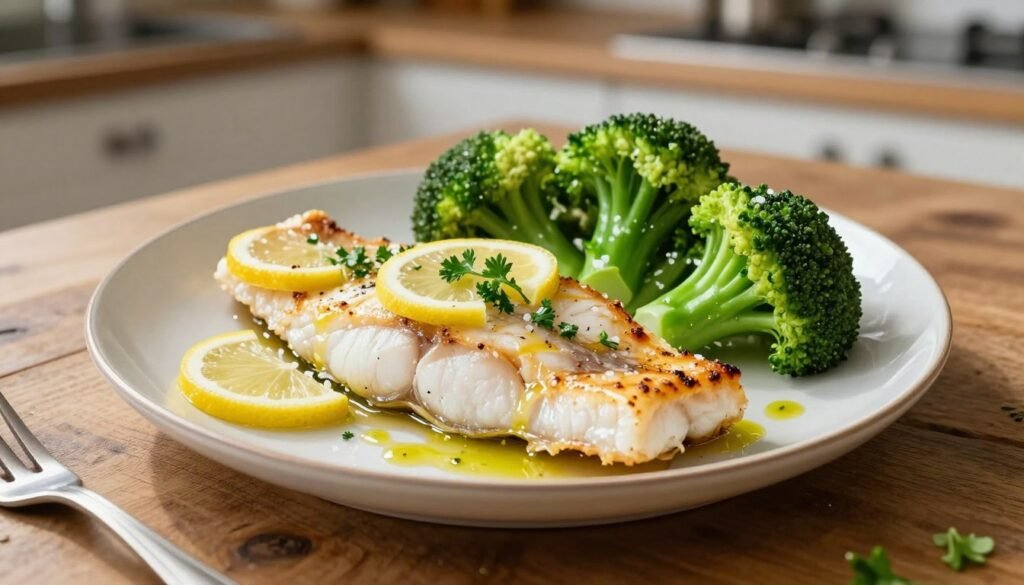
Need a healthy fish dinner that is easy to prepare and leaves you with minimal cleanup? This baked fish with garlic and broccoli comes together on one pan with tender white fish fillets, fresh broccoli, lemon, olive oil, and simple seasonings.
This easy seafood dinner relies on simple ingredients like cod, tilapia, or haddock to suit your budget.
By roasting the broccoli first, then adding the fish, you can achieve tender vegetables and moist, flaky fish in about 22 to 26 minutes of baking time.
Make sure the fish reaches an internal temperature of 145°F before serving. This Baked Fish with Garlic and Broccoli recipe offers a stress-free way to enjoy a nutritious meal at home.
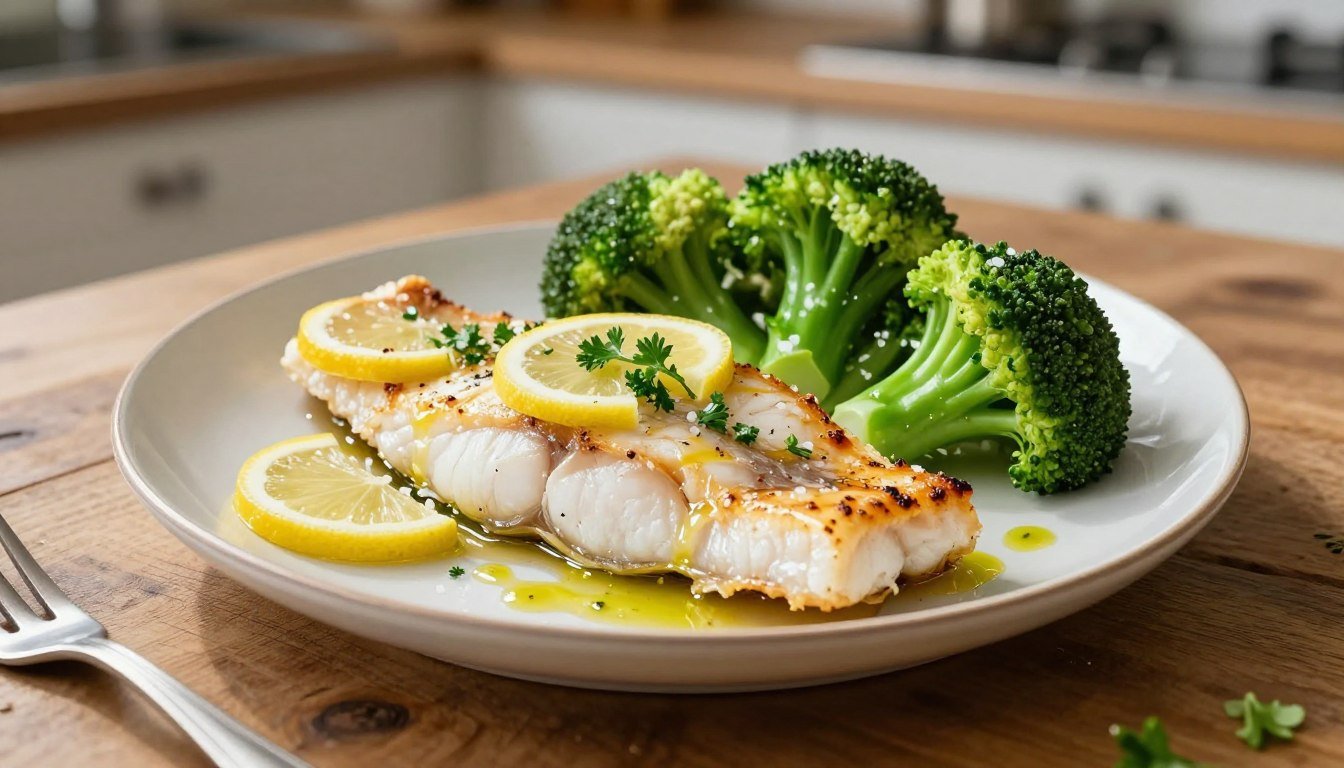
Easy Baked Fish with Garlic and Broccoli
Ingredients
Equipment
Method
- Preheat the oven to 425°F (220°C). Line a large rimmed baking sheet with parchment paper or lightly coat it with cooking spray.
- Pat the fish fillets dry with paper towels. Check for pin bones and remove them with kitchen tweezers if necessary.
- Place the broccoli florets and peeled garlic cloves in a large bowl. Mix the olive oil, lemon juice, salt, black pepper, and paprika in a small bowl. Toss the broccoli and garlic with about half of the seasoning mixture.
- Spread the broccoli and garlic in a single layer on the prepared baking sheet. Roast for 10 minutes.
- Brush the fish fillets with the remaining seasoning mixture. Remove the baking sheet from the oven and arrange the fish beside the broccoli without overcrowding the pan.
- Bake for another 12 to 16 minutes, until the broccoli is tender and the fish is opaque, flakes easily with a fork, and reaches an internal temperature of 145°F (63°C).
- Let the fish rest for 3 minutes. Sprinkle with chopped parsley, add an extra squeeze of lemon juice, and serve warm.
Key Takeaways
- Use firm white varieties like cod or haddock for the best texture.
- Roast at 425°F to ensure the vegetables become tender while the protein stays moist.
- Check for an internal temperature of 145°F to guarantee food safety.
- Minimize your kitchen cleanup by using a single sheet pan for the entire meal.
- Customize your flavor profile by adding fresh herbs like parsley before serving.
Choose the Best Fish and Make Substitutions
Whether you are a fan of mild white fish or looking for a quick swap, this guide helps you adjust your meal with confidence. You can easily adapt this recipe to fit your pantry and personal taste while keeping the core method intact. Flexibility in the kitchen is the key to a stress-free dinner.
Cod, Tilapia, and Haddock Differences
When selecting your protein, consider the unique characteristics of each variety. Cod is a popular choice for a cod baked fish because it is thick, mild, and flakes beautifully once cooked. If you prefer something leaner that cooks very quickly, a tilapia substitution works perfectly in this method.
For those who enjoy a slightly more robust profile, a haddock recipe is an excellent alternative. Haddock offers a firmer texture that holds up well under high heat. Regardless of the fish you choose, always prioritize the thickness of the fillet over the specific name when setting your timer.
Vegetable and Seasoning Substitutions
If you want to change up the greens, you have plenty of delicious options. Cauliflower florets, fresh green beans, or sliced zucchini make fantastic replacements for broccoli. These vegetables roast beautifully alongside your baked white fish, providing a similar crunch and nutritional profile.
When it comes to seasonings, do not worry if you are missing a specific ingredient. If you do not have fresh garlic cloves, you can easily use minced garlic from a jar or a pinch of garlic powder. These small changes allow you to create a flavorful meal without needing a trip to the store.
Oil, Garlic, and Dietary Adjustments
You can also swap your cooking fats based on your dietary needs or what you have in your cupboard. Avocado oil is a wonderful, high-heat alternative to olive oil that adds a subtle richness to the dish. Always remember that the most important rule is to ensure your fish reaches an internal temperature of 145°F.
By focusing on the thickness of your fillets, you ensure that every piece is cooked to perfection. Adjusting your baking time based on the size of the fish is more reliable than following a strict clock. This simple approach guarantees a moist, tender result every single time you cook.
Serve This Easy Seafood Dinner
Turning a basic meal into a restaurant-quality experience starts with the final presentation. Once your oven timer dings, you are ready to transform your kitchen into a delightful dining space. Preparing a healthy fish dinner is about more than just the cooking; it is about how you bring the components together on the plate.
Choose Complementary Side Dishes
To create a balanced meal, pair your baked fish with sides that soak up the delicious garlic juices. Hearty grains like brown rice or fluffy quinoa work perfectly to round out the plate. If you prefer something crisp, a simple green salad with a light vinaigrette adds a refreshing contrast to the warm, flaky fish.
For those who enjoy comfort food, roasted potatoes or a slice of crusty whole-grain bread are excellent choices. These sides ensure that every bit of the garlic-infused oil is enjoyed. You can mix and match these options based on what you have in your pantry.
Add Sauces and Fresh Garnishes
Brighten the flavors of your dish by adding fresh elements right before serving. A light garlic-lemon drizzle or a dollop of cool yogurt-dill sauce provides a vibrant finish that complements the white fish beautifully. These additions enhance the taste without masking the delicate natural flavor of the seafood.
Don’t forget the power of fresh herbs and citrus. A sprinkle of chopped parsley adds a pop of color, while fresh lemon wedges allow your guests to adjust the acidity to their liking. These simple fish serving ideas make a world of difference in the final presentation.
Plate for Four People
When you are ready to serve this easy seafood dinner, aim for consistency across all four plates. Place one 6-ounce fillet in the center of each dish. Distribute approximately one-quarter of the roasted broccoli and garlic alongside the fish to ensure everyone gets a balanced portion.
| Side Dish | Flavor Profile | Best For |
| Brown Rice | Nutty and Hearty | Filling Meals |
| Green Salad | Crisp and Light | Summer Dining |
| Roasted Potatoes | Savory and Soft | Comfort Food |
| Whole-Grain Bread | Crusty and Rustic | Sopping Up Juices |
Prevent Common Baking Mistakes
Achieving the perfect balance when cooking fish and broccoli requires a few simple adjustments to your technique. By paying attention to how you prep and monitor your ingredients, you can ensure a delicious result every time you step into the kitchen.
Avoid Dry or Undercooked Fish
To prevent dry baked fish, always select fillets that have a similar thickness. This ensures that every piece cooks at the same rate, so you do not end up with one overcooked portion while another remains raw.
Avoid the temptation to guess when the fish is ready. Using a meat thermometer is the most reliable way to check for doneness, as it takes the guesswork out of your cooking process. Always aim for an internal temperature that ensures the fish is flaky and moist.
Keep Broccoli from Burning or Staying Hard
Getting tender roasted broccoli is all about managing your prep work. If you leave your florets too large, they will stay tough and crunchy while the rest of the meal finishes.
Try cutting your broccoli into uniform, bite-sized pieces to promote even cooking. If you find your vegetables are not softening enough, roast them for about ten minutes before adding the fish to the pan. This simple step protects your garlic from burning while ensuring the broccoli reaches the perfect texture.
Improve Flavor and Texture
Small details often make the biggest difference in your final dish. Always pat your fillets dry with a paper towel before seasoning, as excess moisture can lead to steaming rather than roasting.
Make sure to provide enough space between your ingredients on the baking sheet. Crowding the pan prevents proper air circulation, which can lead to soggy results. Finally, brighten your meal by adding a squeeze of fresh lemon juice and a sprinkle of chopped parsley right before serving to truly elevate the flavor profile.
Store, Reheat, and Use Leftovers
Proper storage is the secret to keeping your seafood dinner tasting fresh for days. When you learn how to store baked fish correctly, you ensure that your hard work in the kitchen continues to pay off long after the first meal is finished.
Refrigerate Cooked Fish and Broccoli Safely
Always cool your leftovers promptly after dinner. You should place the cooked fish and broccoli into airtight containers within two hours of cooking to maintain the best quality.
Keep your refrigerator set at 40°F or below to ensure food safety. When stored properly, your leftover white fish and vegetables will stay delicious for three to four days.
Reheat Without Drying the Fish
The goal when you reheat fish and broccoli is to warm the food through without turning the delicate fillets into rubber. A gentle approach is always best for maintaining the right texture.
Try placing your leftovers in a covered dish inside a 300°F oven. Adding a teaspoon of water or lemon juice to the pan creates steam, which helps keep the fish moist.
If you prefer using a microwave, use short intervals on a lower power setting. This prevents the edges from becoming tough or overcooked.
Repurpose Remaining Portions
If you want to change things up, you can easily transform your leftovers into entirely new meals. Flake the fish into small pieces to create a variety of quick, healthy dishes.
- Toss the fish and broccoli into a warm grain bowl with a drizzle of tahini.
- Use the flaked fish to fill soft corn tortillas for quick fish tacos.
- Add the cold ingredients to a crisp green salad for a protein-packed lunch.
- Stir the leftovers into a creamy chowder base for a comforting second dinner.
Answer Practical Recipe Questions
Let’s clear up some common uncertainties to ensure your dinner turns out perfectly every time. Whether you are a beginner or a seasoned cook, having the right information makes the process much smoother.
Can You Use Frozen Fish or Broccoli?
You can certainly use frozen ingredients, but preparation is key. For frozen fish baking, it is best to thaw the fillets completely in the refrigerator before you start. Always pat them dry with paper towels to remove excess moisture, which helps the fish sear rather than steam.
If you are using a frozen broccoli recipe, keep in mind that the vegetables may contain extra ice crystals. You might need to extend your roasting time by a few minutes to ensure they become tender. Be patient, as the extra water needs to evaporate for the best texture.
Should You Cover the Pan?
In most cases, you should avoid covered fish baking to achieve that desirable roasted finish. Leaving the pan uncovered allows the heat to circulate properly and helps the edges of the broccoli get crispy. If you notice the fish browning too quickly, you can loosely tent the pan with foil for the final few minutes of cooking.
Why Is the Fish Releasing Liquid?
Seeing fish releasing water during the cooking process is quite common, especially if the fillets were not dried thoroughly. This liquid often comes from the natural moisture inside the fish or ice glaze from frozen products. If you see a lot of liquid, simply drain it carefully or let it evaporate during the last stage of roasting.
How Do You Know When the Broccoli Is Done?
The best way to check for doneness is to use a fork on the thickest part of the broccoli stem. If the fork slides in with little resistance, your vegetables are ready to enjoy. The florets should be tender and lightly browned, providing a delicious contrast to the flaky fish.
Conclusion
This baked fish with garlic and broccoli is a simple, nutritious dinner that is perfect for busy weeknights. Roasting the broccoli first helps it become tender and lightly browned while the fish remains moist and flaky.
Serve the dish as soon as the fish reaches an internal temperature of 145°F. You can use cod, tilapia, or haddock and adjust the seasonings to suit your taste. Store any leftovers in an airtight container in the refrigerator and reheat them gently before serving.